Auteur: Lianne de Haan

  • ROG going strong na meer dan 30 jaar

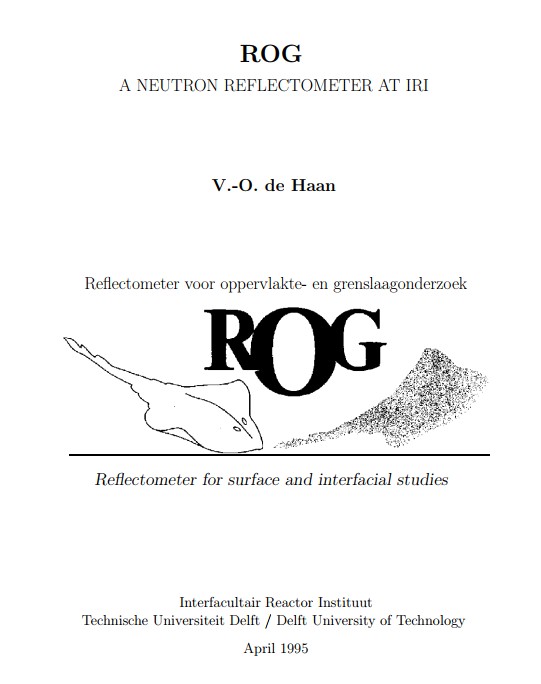
    Het is fijn om te weten dat het instrument dat ik hielp ontwikkelen tijdens mijn PhD aan het reactor instituut te Delft (RID) nu zijn volledige potentieel bereikt door de installatie van een Koude Neutronen Bron bij de Hoger Onderwijs Reactor (HOR) op hetzelfde instituut.

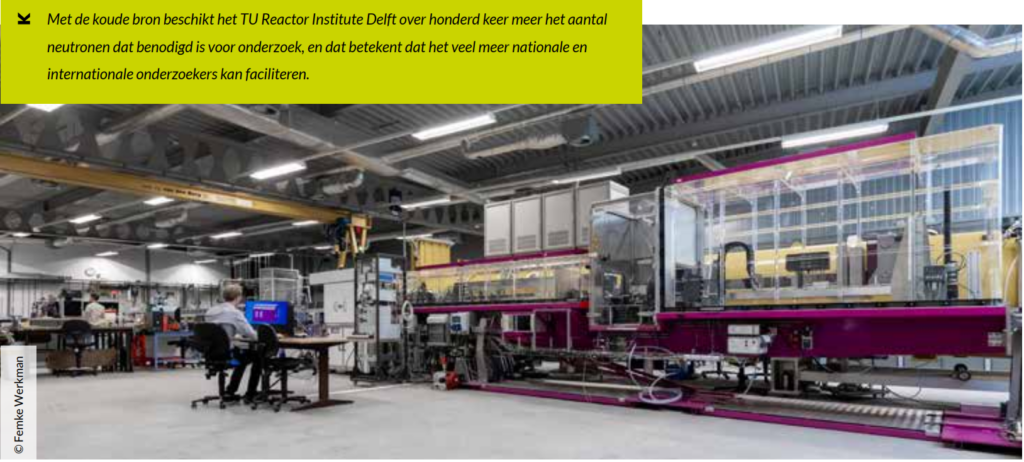
    Bovendien heb ik ook mogen bijdragen aan het OYSTER project dat de installatie van de koude bron mogelijk maakte. De huidige directeur van het RID legt uit: “We hebben het afgelopen jaar flink aan de weg getimmerd”, vertelt Koppers. “Het eerste jaar laat zien dat de koude bron zeer stabiel is en daarmee een mooie constante bron van langzame neutronen levert waar onderzoekers gebruik van kunnen maken.” De koude bron blijkt na een jaar functioneren zeer stabiel en werkt boven verwachting. “We hebben nu tot honderd keer meer het aantal neutronen tot onze beschikking voor onderzoek en dat betekent dat we veel meer onderzoekers kunnen faciliteren. Niet alleen vanuit ons eigen instituut, maar ook vanuit Europa”, aldus Koppers.

    Bron: KernVisie Magazine, Jaargang 20, Nummer 6, December 2025

  • ROG going strong after more than 30 years

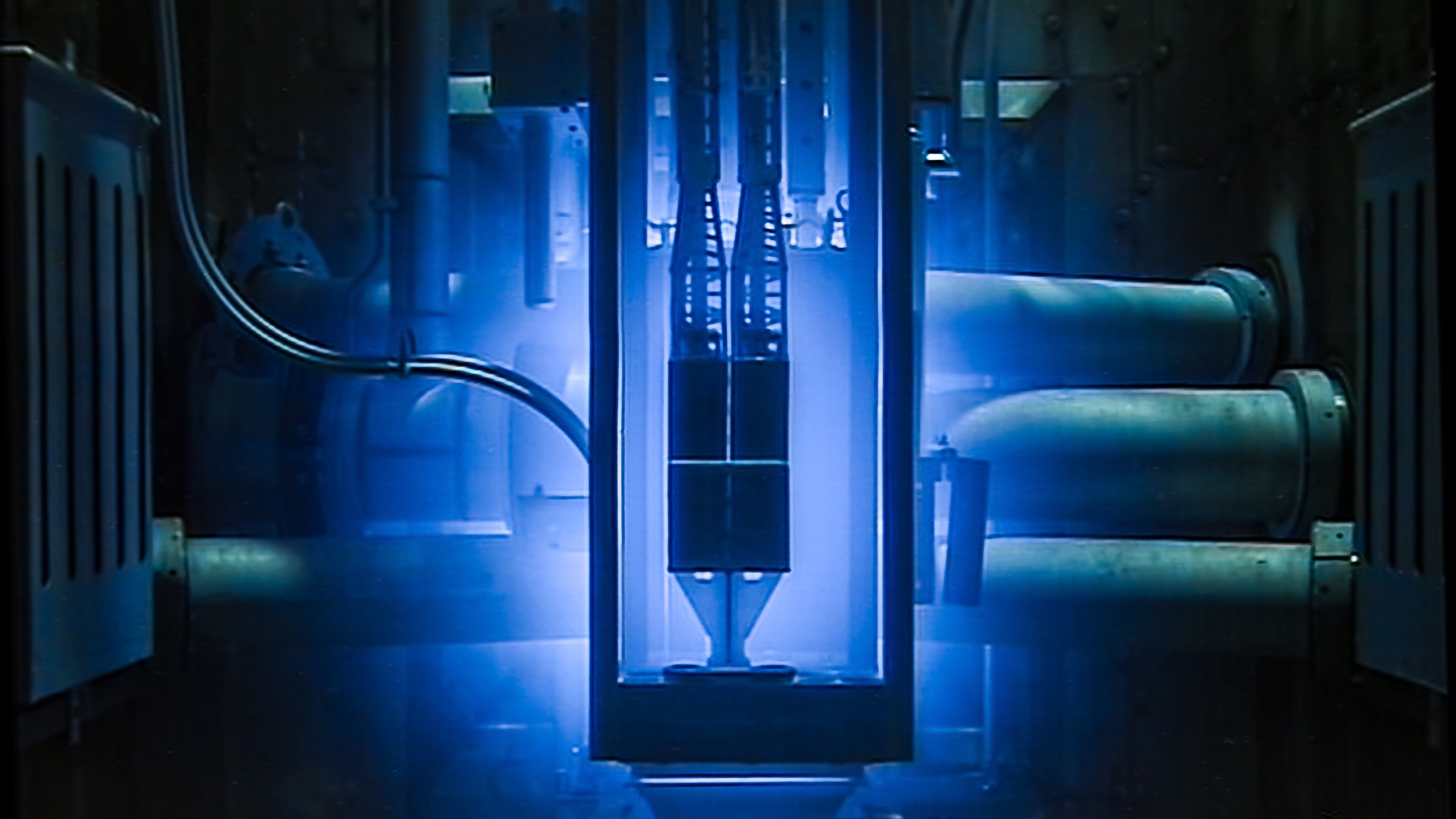
    It is very rewarding to know that the instrument that I helped developing during my PhD at the Reactor Institute Delft (RID) is now finally reaching its ultimate performance because of the installation of a Cold Neutron Source (CNS) at the Hoger Onderwijs Reactor (HOR) at the same institute.
    Even more rewarding is the fact that I was able to contribute to the OYSTER project that enabled the installation of the CNS. The current director of RID explains (in Dutch): “We hebben het afgelopen jaar flink aan de weg getimmerd”, vertelt Koppers. “Het eerste jaar laat zien dat de koude bron zeer stabiel is en daarmee een mooie constante bron van langzame neutronen levert waar onderzoekers gebruik van kunnen maken.” De koude bron blijkt na een jaar functioneren zeer stabiel en werkt boven verwachting. “We hebben nu tot honderd keer meer het aantal neutronen tot onze beschikking voor onderzoek en dat betekent dat we veel meer onderzoekers kunnen faciliteren. Niet alleen vanuit ons eigen instituut, maar ook vanuit Europa”, aldus Koppers.

    Source: KernVisie Magazine, Jaargang 20, Nummer 6, December 2025

  • Energy for the future

    The first fruits of our project on Low Energy Nuclear Reactions.

    Current day science and NDT will be highly benefited by a compact neutron source of moderate intensity and costs. During the last months we have been researching what such a neutron production would look like, based on Low energy nuclear reactions (LENR).

    Typical neutron production relies on fission or fusion. The former requires a high-cost nuclear reactor, and fusion requires a high kinetic energy of the fusing particles to overcome the Coulomb barrier (hot-fusion). However, there are other ways to overcome the Coulomb barrier. Formerly known as cold-fusion, nowadays as LENR, experiments show that this type of fusion can be used to create neutrons. Even though the method is more complex, the equipment needed is much simpler and thus more cost-effective in comparison to hot-fusion or fission reactors.

    Through an extensive literature review in the first phase of this project, different routes were investigated to produce neutrons with LENR. A list of the known methods, such as fusion by means of accelerators, discharges, sound, and lasers, was established including (dis)advantages. The chosen methods were deemed theoretically sound, but not all were based on established nuclear theories. In the latter case, they were based on verifiable alternatives.

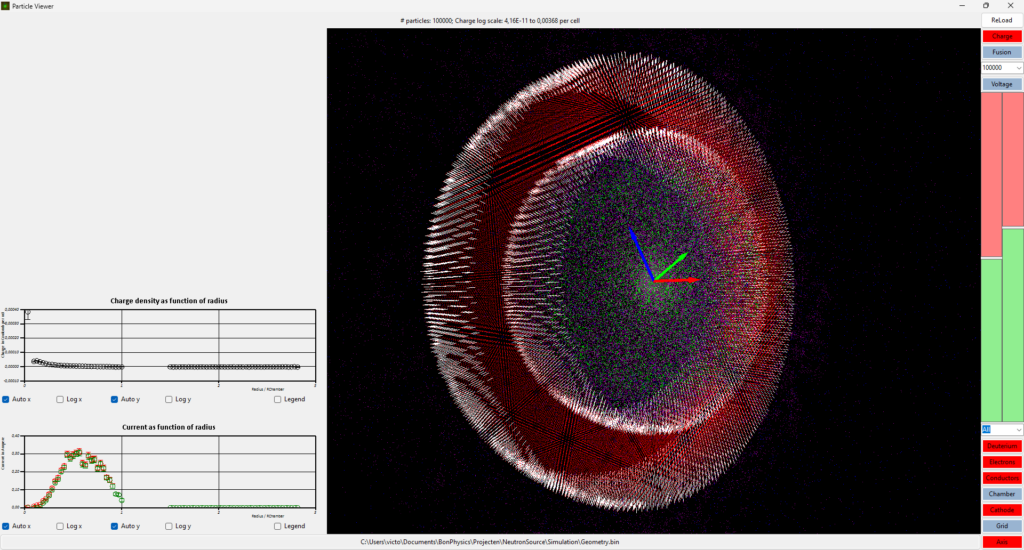
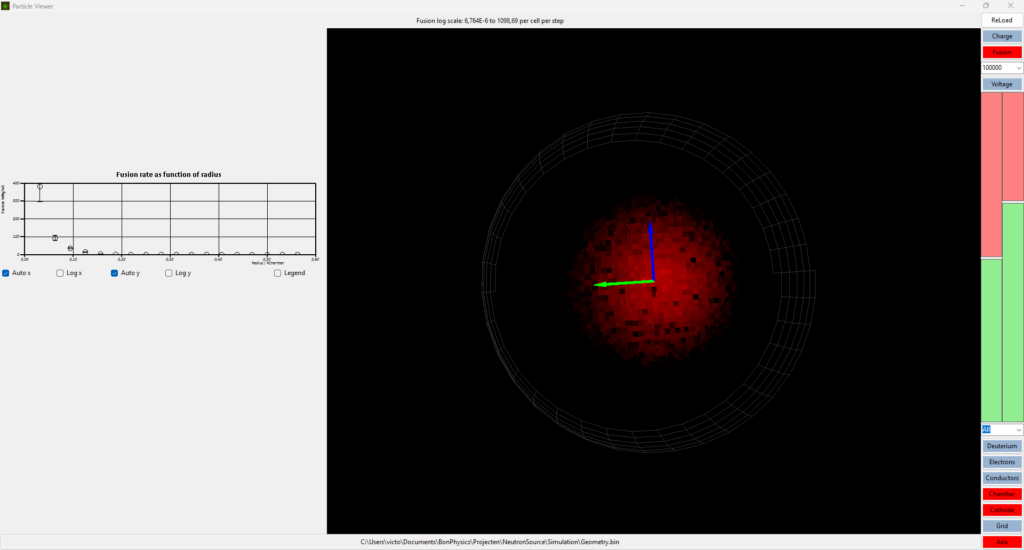
    As the ultimate goal of this project is to identify a way to create a relatively affordable and simple LENR neutron source, and taking into account the results from the literature review, we chose to develop a particle simulator. (See screenshots below) This simulator enables the full electrodynamic simulation of an electrostatic fusor. It is also capable of tracking the positions of electrons and ions in an arbitrary geometry and potential. Which in turns leads to the opportunity to examine whether certain potentials produce exotic ion/ charge structures, which may amplify fusion.

    In this simulation the fusion rate is calculated using a simple Bosch-Hale model, the fusion cross section is based on empirical observations of the fusion rate against Centre of Mass energy. As a result, the simulator is able to detect: exotic charge structures / destinies and energetic anomalies. A separate simulation will be required to calculate the modified fusion cross section in the case that an exotic structure is identified. 

    Now we can work with the simulator, we will test and calibrate it against known geometries. After that we can optimize geometries with the help of this simulation suite, bringing us yet another step closer to the identification of a non-complex, well-affordable LENR neutron source with market potential.
     

    The simulator testing phase in progress…

    Research into energy for the future is ongoing and so many resources are spent. The stakes are high and the needs are strong. Therefore I do not understand why not more resources are spent on the most promising energy source under investigation today.

    What I refer to is the emerging technology known today as ‘Low Energy Nuclear Fusion’, once described as Cold Fusion.

    This technology is now on the break through, but still needs lots of material research and technology development. The development is ongoing since the 1989 publication of Fleischmann and Pons, and will take another century unless more resources and more interest is spent in the development of these processes. Some work has been done, is being done and will be done (several EU and USA grants have been supplied) but the magnitude of the work being done is only a fraction of what is possible and what is warranted given the current situation of the energy supplies in the world.

    Therefore, I call upon our governments, universities and businesses to take the development of this technology more serious. The task is not small, but the possible rewards are huge, as long as we try to use the technology wisely.

    The way forward it to select 3 or 4 possible processes that have been developed, and select an expert team that will investigate these and find ways to develop scientific proof and technological deployment. Both formidable tasks, but with sufficient interest, manpower and resources the results will be extremely rewarding.


    So, I call upon those who read this message: The support of the development of this new technology will benefit us all.


    European team:
    “CleanHME shall develop a new, clean, safe, compact and very efficient energy source based on Hydrogen-Metal and plasma systems, which could be a breakthrough for both private use as well as for industrial applications. The new energy source could be employed both as a small mobile system or alternatively as a stand-alone heat and electricity generator. We plan to construct a new compact reactor to test the HME technology during the long-term experiments and increase its technology readiness level. A comprehensive theory of HME phenomena shall be worked out as well. This project has received funding from the European Union’s Horizon2020 Framework Programme under grant agreement no 951974…”

    American team:
    “The U.S. Department of Energy (DOE) today announced $10 million in funding for eight projects working to determine whether low-energy nuclear reactions (LENR) could be the basis for a potentially transformative carbon-free energy source. The teams selected today—from universities, a national laboratory, and small business—aim to break the stalemate of research in this space…“


  • Het einde van een groot project!

    Gedurende de laatste jaren, was Victor wekelijks betrokken bij het OYSTER project aan de Technische Universiteit van Delft. Een internationaal team werkte jarenlang aan het ontwikkelen van een koude neutronen bron; nu is die in gebruik! Met de toevoeging van een extreem koude vloeibare-waterstof-koude-bron in een straalbuis dichtbij de kern van de reactor, heeft TU Delft nu een van de weinige onderzoeksreactoren in Europa met zo’n bron. De gekoelde neutronen hebben meer interactie met de te onderzoeken objecten, dan de niet gekoelde neutronen. Daarom wordt de kwaliteit en snelheid van de metingen bijna 100 keer zo groot. Nu is dan ook het project onder the afkorting OYSTER, wat staat voor: Optimized Yield – for Science, Technology and Education – of Radiation, succesvol afgerond!

    Om meer over het OYSTER project & de koude neutronen bron te lezen, klik hier!

  • The end of an era!

    Over the last years Victor was weekly involved in the OYSTER project at the Technical University of Delft. An international team worked together to develop a cold neutron source, and now it is in function! With the insertion of an extremely cold liquid hydrogen cold source in a beam tube close to the reactor core, the TU Delft is now one of the few research-reactors in Europe with such a source. The cooled neutrons have more interaction with the objects under investigation than non-cooled neutrons. Hence, the quality and speed of measurements can be improved by 100 fold. Therefore, the project under the acronym OYSTER, which stands for Optimized Yield – for Science, Technology and Education – of Radiation, has now been successfully concluded.

    To read more on the OYSTER project & the cold neutron source, click here!

  • BonPEC updates

    Currently we are testing and certifying our unique application of the Pulsed Eddy Current technology, named BonPEC.

    We are now actively searching for clients willing to invest in our product (reduced costs when results will be used at conferences to present our methodology). In June we will be attending the CINDE conference in Canada!

    Please feel free to contact us when interested or having questions!

  • First progress meeting BonPEC

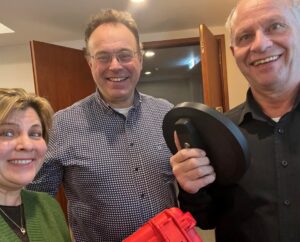
    On the 18th of December, we (Irinia Birman, Anton Prins, Riccardo Scottini, Domenico Bellistri and Victor de Haan) gathered for our first progress meeting! The picture below shows Irina, Victor and Anton (showing the probe), both Riccardo and Domenico joined us online.

    I, Victor, would like to thank all contributors to the BonPEC progress meeting we had last monday. It was nice to exchange past experiences and future possibilities. 
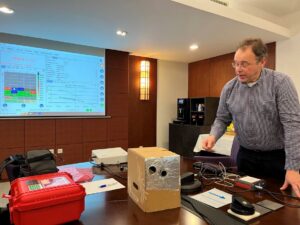
    First of all, we had a demonstration of the current BonPEC system with the P0.5 probe and the new P1.0 probe. Second, we had a discussion about possible clients and applications. Third, we discussed points that can be improved and future possibilities.

  • EUROPORT 2023 x BONPEC

    Stroomi B.V. invited us to visit the EUROPORT 2023, a maritime exhibition. Here we aimed at generating interest for BonPEC. (Read here about BonPEC.)

    It has been an interesting opportunity that resulted in a lot of new connections. An overwhelming amount of high quality stands were present at the exhibition, and the ambiance was nice. An absolute recommendation for the next edition!

  • EUROPORT 2023 x BONPEC

    Op uitnodiging van Stroomi B.V. zijn we naar de EUROPORT beurs 2023 gegaan om interesse op te wekken voor BonPEC. (Lees hier meer over BonPEC.)

    Het was een interessante dag die veel nieuwe contacten opleverde. Op de beurs was een overweldigende hoeveelheid stands van goede kwaliteit en een fijne sfeer: een aanrader voor de volgende keer!

  • Ontwikkeling van BonPEC

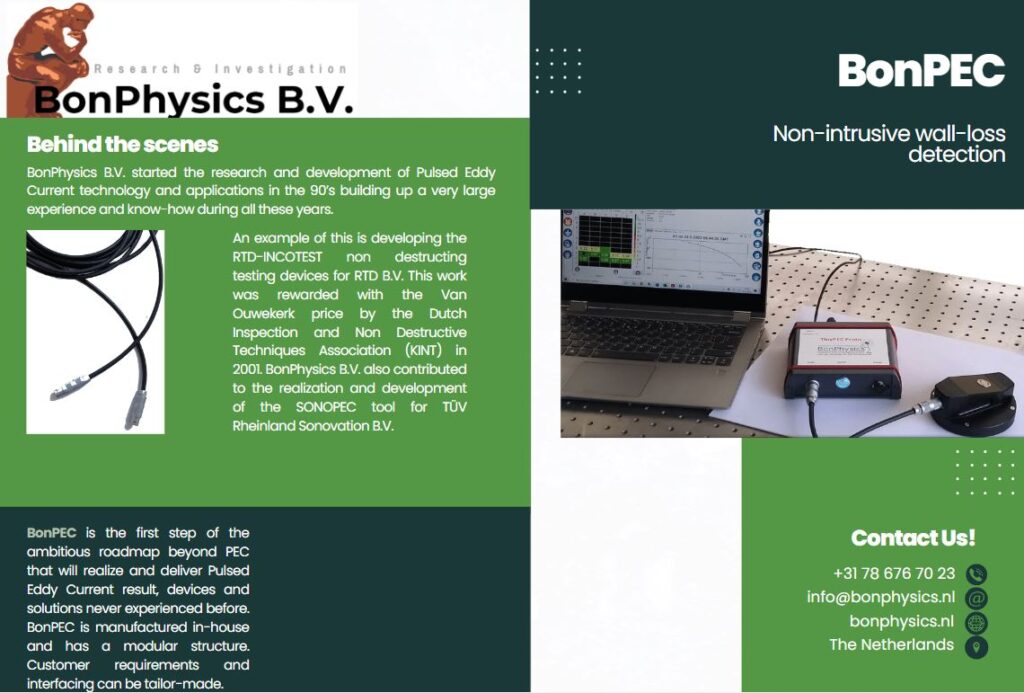
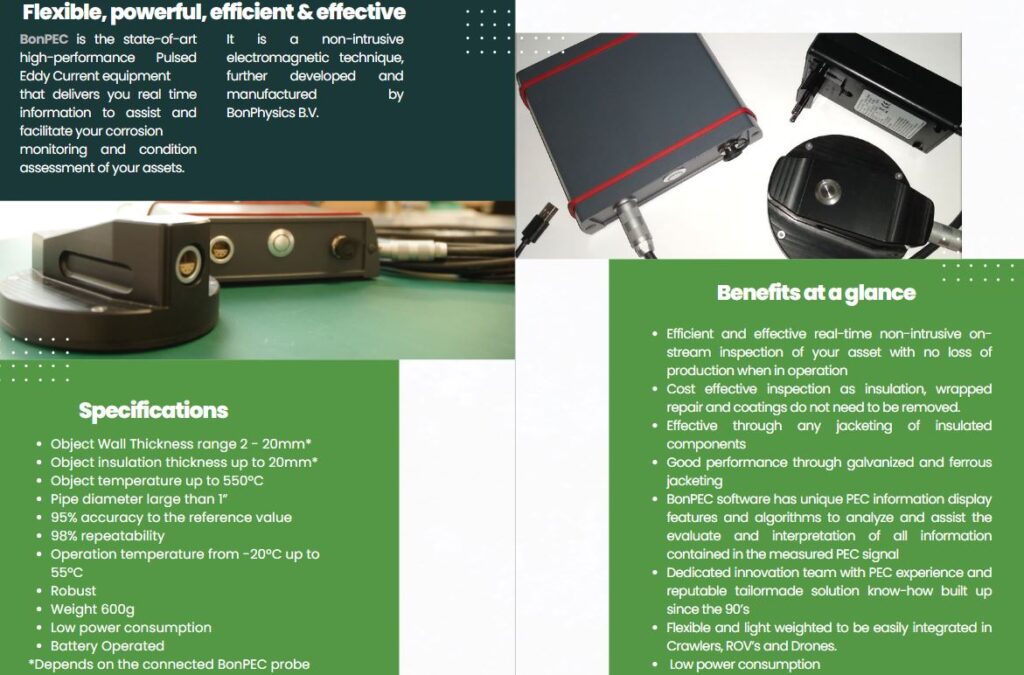
    Onlangs is BonPhysics begonnen met het ontwikkelen van een nieuwe toepassing van Pulsed Eddy Current: de BonPEC. Dit is een aparaat van hoge kwaliteit dat u voorziet van live informatie over corrosie monitoring en de conditie van uw bedrijfsmiddelen. Lees de flyer en ontdek hoe het u ten goede komt om voor BonPEC te kiezen! Neem gerust contact met ons op voor vragen of opmerkingen.